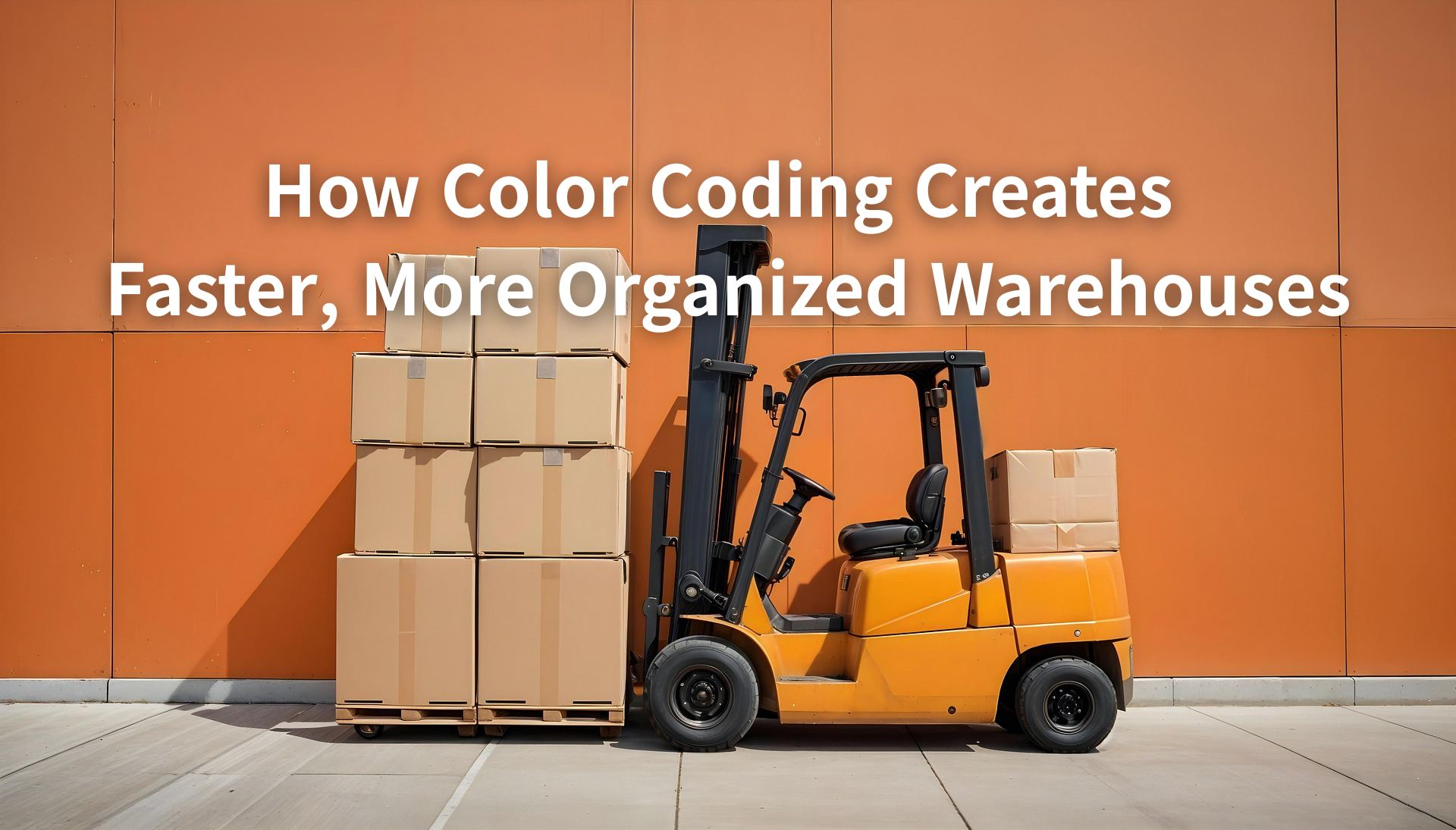
Warehouse efficiency rarely depends on a single major upgrade. More often, it improves through small, repeatable systems that remove friction from everyday tasks. Color coding is one of those systems. When used intentionally, it creates visual order, speeds up movement, and reduces errors across warehouse operations.
For warehouse managers responsible for organization, material flow, and space utilization, color coding offers a practical way to improve performance without disrupting existing processes. When paired with reliable material handling equipment, these visual systems become even more effective.
Color Coding as a Foundation for Warehouse Organization
Warehouses are information-dense environments. Workers must quickly interpret where materials belong, which tools to use, and how to navigate the space. Color coding simplifies these decisions by assigning meaning to colors that employees recognize instantly.
Common applications include:
-
Color-coded zones for receiving, storage, picking, and shipping
-
Visual separation between active inventory, returns, and damaged goods
-
Clearly marked equipment parking and storage locations
When carts, wheelbarrows, and other transport tools are assigned to specific tasks or zones, color identification helps keep equipment from migrating across departments. Heavy-duty utility carts designed for warehouse use support these systems by remaining dependable and easy to deploy wherever they’re needed most.
Increasing Material Handling Efficiency
Material handling inefficiencies often come from hesitation—workers pausing to decide what to move, where to move it, or which equipment to use. Color coding removes that hesitation.
Staging areas marked by color help prioritize workflows, such as separating inbound freight from outbound orders. Equipment that aligns with those workflows reinforces consistency. Electric utility carts, for example, are well suited for repetitive transport routes and can be assigned to specific color-coded zones or departments, improving speed while reducing physical strain.
By combining visual cues with purpose-built material handling tools, warehouses can reduce misrouting, prevent bottlenecks, and maintain steady throughput.
Protecting and Maximizing Warehouse Space
Space efficiency is about control. Without clearly defined boundaries, pallet staging areas expand, walkways narrow, and safety risks increase. Color-coded floor markings help maintain order by visually enforcing how space is intended to be used.
These markings can designate:
-
Pallet staging zones
-
Equipment parking areas
-
Pedestrian walkways
-
Safety clearance zones
Maintaining visibility is critical. Dust and debris can quickly obscure floor markings, reducing their effectiveness. Industrial push sweepers and ride-on sweepers help keep floors clean, ensuring visual systems remain clear and functional while also improving overall warehouse cleanliness.
Supporting Safety and Training Through Visual Systems
Color coding enhances safety by making hazards, restricted areas, and emergency equipment easy to identify. It also accelerates training. New employees can understand warehouse layouts and workflows faster when visual cues are consistent and intuitive.
When combined with organized material handling equipment and clearly maintained spaces, color coding contributes to safer operations without adding complexity or administrative burden.
Color coding proves that simple systems can deliver meaningful results. By improving organization, streamlining material handling, and preserving valuable floor space, it helps warehouse managers operate more efficiently and with greater consistency.
When supported by dependable tools—such as utility carts, electric transport equipment, and industrial sweepers—these visual systems become easier to maintain and scale. In an environment where time, space, and accuracy are critical, color coding remains one of the most practical ways to keep warehouse operations running smoothly.