Which Is the Future of Jobsite Performance?
The construction and equipment industry is undergoing a noticeable shift. As technology advances and jobsite expectations evolve, contractors and professionals are increasingly weighing the benefits of battery-powered tools against traditional gas-powered equipment.
Both options offer distinct advantages, and the right choice often depends on the type of work, environment, and performance demands. Understanding how these two power sources compare is essential for making informed equipment decisions.
The Rise of Battery-Powered Tools
Battery-powered equipment has seen rapid innovation in recent years. Improvements in lithium-ion technology have made these tools more powerful, longer-lasting, and reliable for professional use.
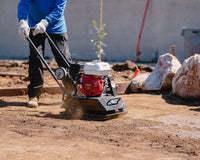
Today’s battery-powered tools are no longer limited to light-duty tasks. Many are capable of handling demanding applications such as cutting, drilling, compacting, and even concrete work.
One of the biggest advantages is convenience. These tools are easy to start, require minimal maintenance, and eliminate the need for fuel storage. They are also significantly quieter, making them ideal for indoor use or noise-sensitive environments.
In addition, battery-powered equipment produces zero emissions at the point of use, which is becoming increasingly important for regulatory compliance and environmentally conscious projects.
The Strength of Gas-Powered Equipment
Gas-powered equipment has long been the standard for heavy-duty jobsite performance. Known for its power and endurance, gas equipment remains a reliable choice for demanding applications.
These machines are capable of running for extended periods without interruption, as long as fuel is available. This makes them particularly valuable on large jobsites or in remote locations where charging infrastructure may be limited.
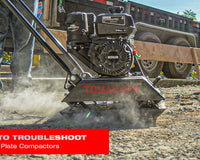
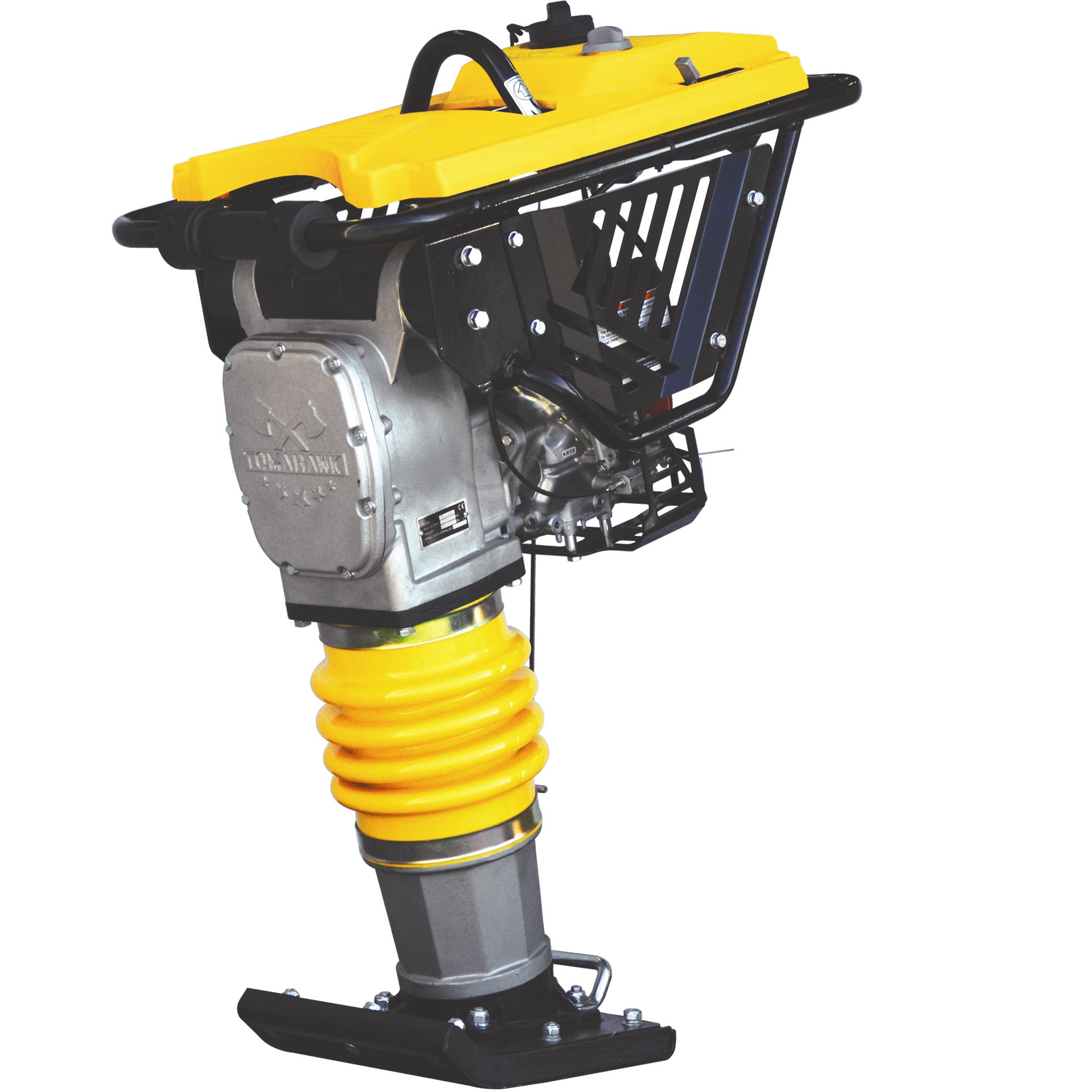
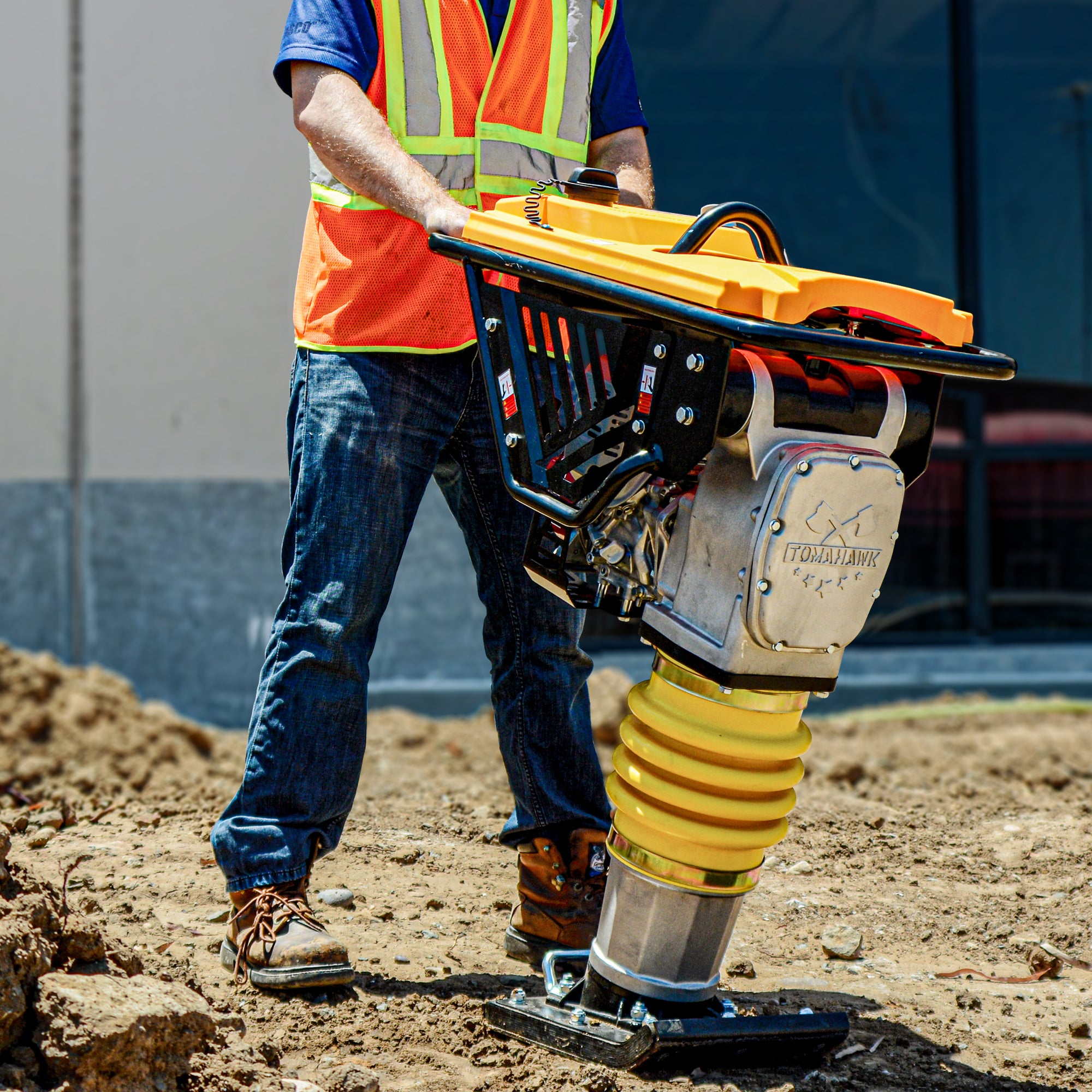
Gas-powered tools also tend to deliver higher power output for certain applications, especially in equipment like compactors, generators, and heavy-duty saws.
However, this performance comes with trade-offs, including higher noise levels, emissions, and more frequent maintenance requirements.
Key Differences Between Battery and Gas Equipment
The most significant difference lies in power delivery and runtime. Gas-powered equipment typically offers continuous operation, making it suitable for long, uninterrupted tasks. Battery-powered tools, while powerful, are limited by battery capacity and may require recharging or swapping batteries during extended use.
Ease of use is another major factor. Battery-powered tools are generally easier to operate, with push-button starts and fewer components to manage. Gas equipment requires fueling, priming, and regular engine maintenance.
Noise and emissions also set these two options apart. Battery-powered tools operate quietly and produce no direct emissions, making them ideal for indoor or urban environments. Gas-powered equipment is louder and emits exhaust, which can limit its use in certain settings.
Portability and weight can vary depending on the tool, but battery-powered equipment often eliminates the need to carry fuel, simplifying logistics on the jobsite.
Productivity and Workflow Considerations
Productivity depends on how well the equipment fits the jobsite workflow. Battery-powered tools excel in environments where mobility, quick setup, and low noise are important. They allow crews to move efficiently without dealing with fuel or cords.
Gas-powered equipment, on the other hand, supports continuous operation without downtime for charging. This can be critical for large-scale projects where stopping work to recharge batteries is not practical.
For many contractors, a combination of both technologies offers the best results. Battery tools can handle quick tasks and indoor work, while gas equipment supports heavy-duty, long-duration applications.
Cost and Maintenance
Initial costs for battery-powered tools can be higher, especially when factoring in batteries and chargers. However, they often have lower operating costs over time due to reduced fuel consumption and maintenance needs.
Gas-powered equipment typically has a lower upfront cost but requires ongoing expenses for fuel, oil, and engine maintenance. Over time, these costs can add up, particularly for frequently used equipment.
Maintenance is another consideration. Battery-powered tools have fewer moving parts and generally require less servicing. Gas equipment requires regular upkeep to ensure optimal performance and longevity.
When to Choose Battery-Powered Equipment
Battery-powered tools are ideal for:
-
Indoor or enclosed environments
-
Noise-sensitive areas
-
Jobs requiring quick setup and mobility
-
Projects with environmental or emission restrictions
They are also a strong choice for contractors looking to modernize their equipment and reduce maintenance complexity.
When to Choose Gas-Powered Equipment
Gas-powered equipment is best suited for:
-
Large-scale or heavy-duty applications
-
Remote jobsites without access to charging
-
Long-duration tasks requiring continuous operation
-
High-power requirements
They remain a dependable option for demanding conditions where performance and runtime are critical.
The Future of Jobsite Equipment
The industry is clearly moving toward battery-powered solutions, driven by advancements in technology, environmental regulations, and the demand for quieter, cleaner equipment.
However, gas-powered equipment is far from obsolete. It continues to play a vital role in heavy-duty applications where maximum power and uninterrupted runtime are essential.
As battery technology continues to improve, the gap between these two options is narrowing. For many professionals, the future lies in a balanced approach—leveraging the strengths of both battery and gas-powered equipment to maximize efficiency, flexibility, and performance on the jobsite.