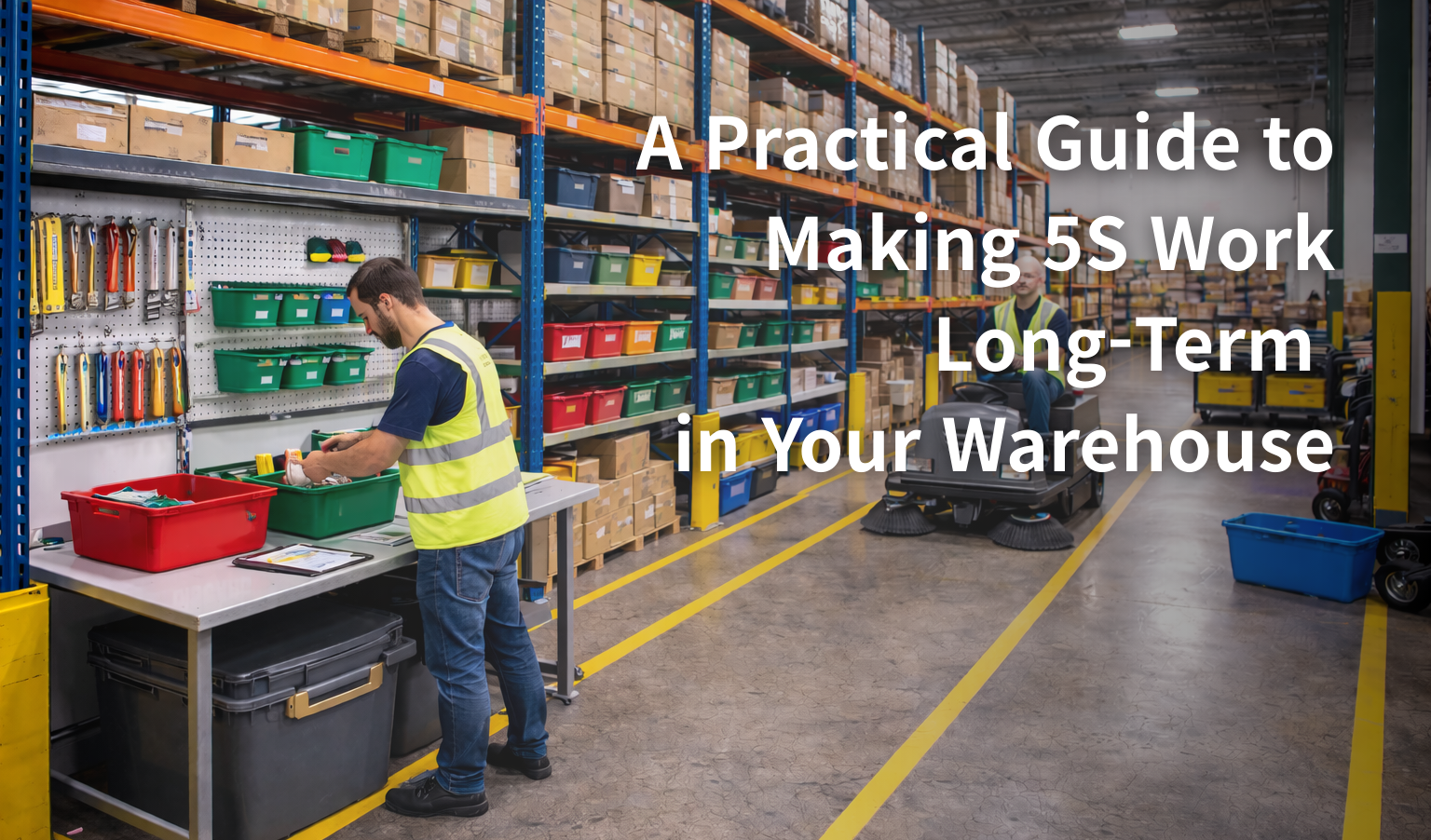
Warehouse organization isn’t just about cleanliness—it’s about creating repeatable systems that support speed, safety, and efficient material flow. The 5S methodology is one of the most effective frameworks for achieving this, but many warehouses struggle to maintain it after the initial rollout. The difference between short-term improvement and long-term success comes down to how well 5S is integrated into daily operations.
For warehouse managers, the goal is to implement 5S in a way that improves organization and space efficiency without slowing down the work that keeps the business moving.
Start With a Clear Baseline and Realistic Scope
Before launching 5S, it’s important to understand your current state. Identify high-traffic areas, chronic bottlenecks, and zones where clutter routinely builds up. Starting with one department or process—rather than the entire warehouse—allows teams to see quick wins without feeling overwhelmed.
This approach also helps managers evaluate which material handling tools are truly needed. When equipment is right-sized to the task, organization becomes easier to maintain.
Sort: Remove Barriers to Efficient Movement
The first step of 5S focuses on removing anything that interferes with workflow. Unused tools, broken equipment, excess packaging, and outdated inventory all take up valuable space and slow material handling.
Clearing these items improves visibility and reduces unnecessary movement. When only essential carts, wheelbarrows, and transport tools remain on the floor, aisles stay open and processes become more predictable.
Set in Order: Design for How Work Actually Happens
Once unnecessary items are removed, everything that remains should have a defined location based on frequency of use. High-use tools belong closest to the point of work, while less-used items can be stored further away.
Material handling equipment plays a key role here. Utility carts and electric transport equipment are easier to organize when they’re designed for daily warehouse use and can be parked consistently without blocking traffic. Clearly defined parking zones help reinforce this step.
Shine: Maintain Visibility and Equipment Performance
A clean warehouse is easier to manage and safer to operate. Dust, debris, and spills obscure floor markings and make it harder to maintain 5S standards.
Routine floor cleaning supports both organization and equipment longevity. Industrial push sweepers and ride-on sweepers help maintain clean aisles and staging areas without interrupting operations, ensuring visual systems remain clear and effective.
Standardize: Make 5S Easy to Follow
Standardization turns individual efforts into a system. Consistent layouts, labels, and storage rules reduce confusion and speed up training for new employees.
When material handling equipment is standardized—using similar carts, wheelbarrows, and transport tools across departments—it becomes easier to enforce placement rules and maintain visual order throughout the warehouse.
Sustain: Reinforce 5S Through Daily Habits
Sustainment is where most 5S initiatives fail. Without ongoing reinforcement, clutter slowly returns and standards erode.
Daily routines, short audits, and clear accountability help prevent this. Encouraging teams to return equipment to designated zones and keep work areas clear at shift changes keeps 5S embedded in normal operations. Durable, well-built equipment supports these habits by performing reliably and fitting seamlessly into organized layouts.
Implementing 5S successfully requires more than a cleanup—it requires aligning organization with how work is actually done. When 5S supports material flow, space efficiency, and practical daily routines, it becomes a productivity tool rather than an extra task.
By pairing the 5S framework with dependable material handling solutions—such as heavy-duty utility carts, electric transport equipment, and industrial sweepers—warehouse managers can create systems that stay organized long after the initial rollout and continue delivering efficiency gains over time.