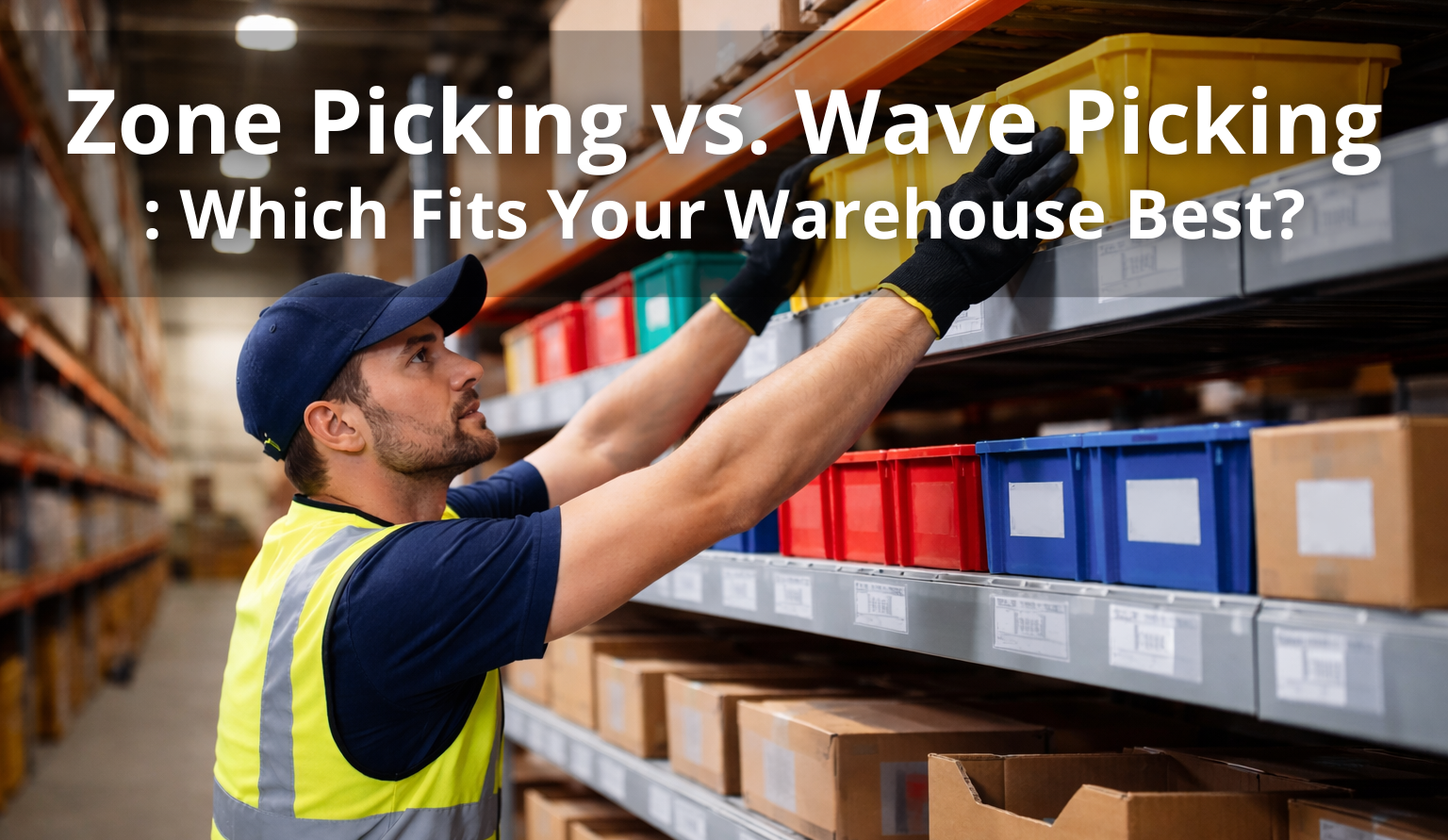
Choosing the right picking method directly affects efficiency, labor use, and space management. Zone picking and wave picking each offer advantages depending on warehouse layout, order volume, and workflow needs. Understanding how they differ helps managers select the approach that best supports daily operations.
How Zone Picking Works
Zone picking divides the warehouse into defined areas. Each worker is responsible for picking items within a specific zone, and orders move from zone to zone until complete.
This method reduces travel distance, limits aisle congestion, and improves organization. It works well in larger facilities or operations with high SKU counts, where familiarity with a specific area can improve accuracy.
How Wave Picking Works
Wave picking releases groups of orders at scheduled times. Pickers may travel throughout the warehouse to complete all items for each wave.
This approach is often used to align picking with shipping schedules or labor availability. While effective during peak periods, wave picking requires careful coordination to avoid congestion and delays.
Organization and Workflow Control
Zone picking provides clear structure by defining responsibility areas and reducing overlap between workers.
Wave picking focuses on timing and coordination. Its success depends on well-planned staging areas and predictable movement between picking, packing, and shipping.
Material Handling Needs
Material handling plays a different role in each method. Zone picking requires efficient transfer of partially completed orders between zones.
Mobile carts and utility-style carriers are commonly used for this purpose. In many warehouses, electric utility carts are used to move multiple totes or cartons while fitting within narrow aisles.
Wave picking relies more heavily on staging areas where completed orders wait for packing or shipping. Flatbed carts and rolling platforms, including Tomahawk Power flatbed or utility carts, are often used to keep staged orders organized without using fixed floor space.
Space Efficiency and Layout Impact
Zone picking improves space efficiency by reducing cross-traffic and keeping workers within defined areas. This approach suits narrow-aisle layouts and dense storage environments.
Wave picking often requires additional staging space between waves. Without adequate planning, this can create congestion near packing stations or main aisles.
Choosing the Right Approach
The best method depends on order patterns, layout, and staffing. Zone picking works well for high-SKU operations with steady order flow, while wave picking fits operations driven by shipping cutoffs.
Some warehouses use a hybrid model, combining zone picking with scheduled waves. In these setups, mobile transport equipment—such as utility carts used in warehouses, including Tomahawk Power equipment—helps maintain flow between zones and staging areas.
Practical Tips
-
Measure travel distance and aisle congestion
-
Size staging areas for peak demand
-
Use mobile carts to reduce manual handling
-
Review performance and adjust zones or wave timing as needed
Both zone picking and wave picking can be effective when aligned with the right environment. By focusing on organization, efficient material handling, and space efficiency, warehouse managers can implement a picking strategy that supports reliable and scalable operations.