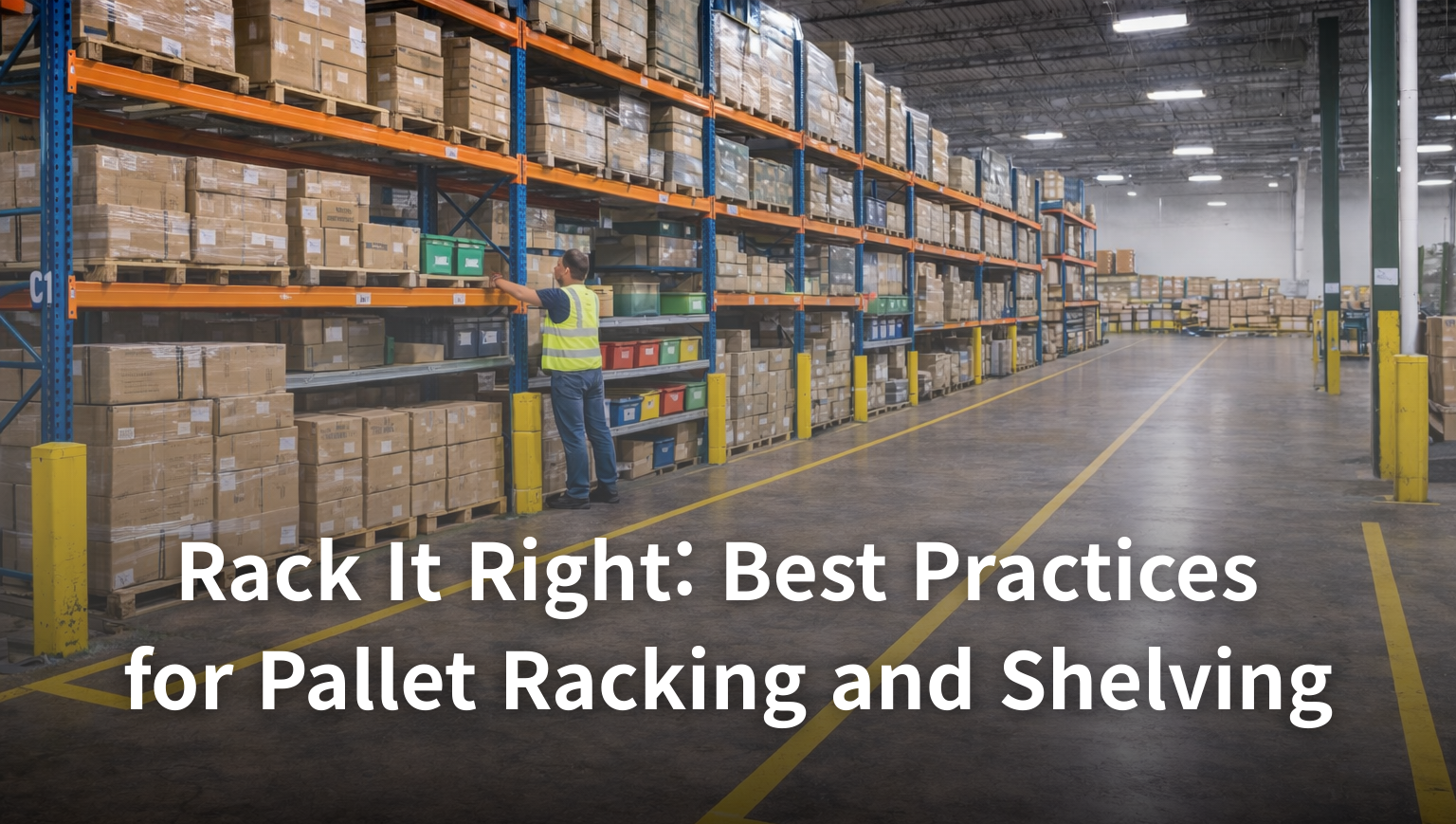
Pallet racking and shelving systems are the backbone of warehouse organization. When designed and managed correctly, they improve material flow, maximize available space, and support safer, faster operations. When they aren’t, they create congestion, increase handling time, and raise the risk of damage or injury.
For warehouse managers, getting racking right isn’t just about storage capacity—it’s about how inventory, equipment, and people move through the facility every day.
Start With a Layout That Matches Your Workflow
Before installing or rearranging pallet racking, it’s critical to understand how materials move through your warehouse. High-turn inventory should be placed closer to receiving and shipping areas, while slower-moving items can be stored deeper in the layout.
Aligning racking placement with material flow reduces unnecessary travel and keeps aisles open. This approach also supports smoother operation of material handling equipment such as utility carts and electric transport tools that rely on clear, predictable pathways.
Choose the Right Racking for Your Inventory
Not all pallet racking systems serve the same purpose. Selective racking offers easy access for high-SKU environments, while drive-in or push-back systems may work better for high-volume, low-SKU inventory.
Matching racking type to inventory profile reduces handling time and minimizes rework. Proper racking also helps prevent overstacking and makes it easier to use carts, wheelbarrows, or electric equipment efficiently during picking and replenishment.
Design Aisles for Equipment, Not Just Pallets
A common mistake in warehouse layout is designing aisles solely around pallet dimensions. In reality, aisles must accommodate the equipment moving through them.
Adequate aisle width allows utility carts, electric utility carts, and cleaning equipment to move safely and efficiently. Tight aisles slow operations and increase the risk of collisions with racks or stored inventory.
Use Vertical Space Without Sacrificing Accessibility
Maximizing vertical space is one of the fastest ways to increase storage capacity without expanding your footprint. However, vertical storage must remain accessible and safe.
Clearly labeled shelving levels and consistent pallet placement rules help teams retrieve inventory quickly. Keeping lower levels clear for active picking also supports efficient use of carts and transport equipment, while higher levels store reserve stock.
Keep Racking Areas Clean and Clearly Marked
Cleanliness plays an important role in racking safety and efficiency. Dust and debris around rack bases can hide damage, reduce visibility, and interfere with floor markings.
Routine floor cleaning around racking systems helps preserve clear aisles and improves equipment movement. Industrial push sweepers and ride-on sweepers make it easier to maintain these areas without disrupting daily operations.
Create Dedicated Staging and Buffer Zones
Pallet racking should not double as a staging area. When pallets accumulate at rack bases, aisles become congested and safety risks increase.
Designated staging zones near racking rows keep pallets organized and prevent obstruction. Material handling tools like heavy-duty utility carts and wheelbarrows can help move items in and out of these zones efficiently without blocking access to racks.
Inspect and Maintain Racking Regularly
Racking systems experience constant contact from pallets and equipment. Over time, even minor impacts can weaken structural integrity.
Routine inspections help identify bent uprights, damaged beams, or loose anchors before they become serious hazards. Maintaining clean, organized racking areas also makes damage easier to spot and address quickly.
Well-planned pallet racking and shelving systems do more than store inventory—they shape how efficiently a warehouse operates. By aligning racking layouts with workflow, designing aisles for equipment, and maintaining clean, accessible storage areas, warehouse managers can significantly improve organization and space efficiency.
When supported by reliable material handling solutions—such as durable utility carts, electric transport equipment, and industrial floor sweepers—these best practices become easier to maintain. The result is a safer, more efficient warehouse that’s built to grow without unnecessary friction.