Which Tool Is Right for Your Job?
Proper soil compaction is the foundation of any successful construction project. Whether you're preparing a base for concrete, laying pavers, or working in trenches, choosing the right equipment can make all the difference. Two of the most commonly used tools are the plate compactor and the rammer (also known as a jumping jack). While both are designed to compact soil, they serve very different purposes.
Let’s break down the differences so you can choose the right tool for your next project.
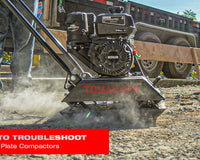
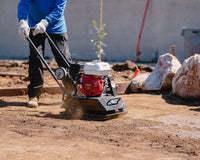
A plate compactor is a machine with a large, flat steel plate that vibrates rapidly to compress soil, gravel, or asphalt. It’s widely used for flat, open areas where even compaction is needed.
How It Works:
-
A motor drives a vibrating plate
-
The plate moves forward (or reverses on some models)
-
Vibrations compact material evenly across the surface
Best Uses:
-
Driveways and sidewalks
-
Patio and paver installations
-
Asphalt work
-
Large, flat areas
Pros:
-
Covers large areas quickly
-
Produces smooth, even compaction
-
Easy to operate
-
Available in forward and reversible models
Cons:
-
Less effective in confined or narrow spaces
-
Not ideal for cohesive (clay-heavy) soils
-
Limited depth of compaction compared to rammers
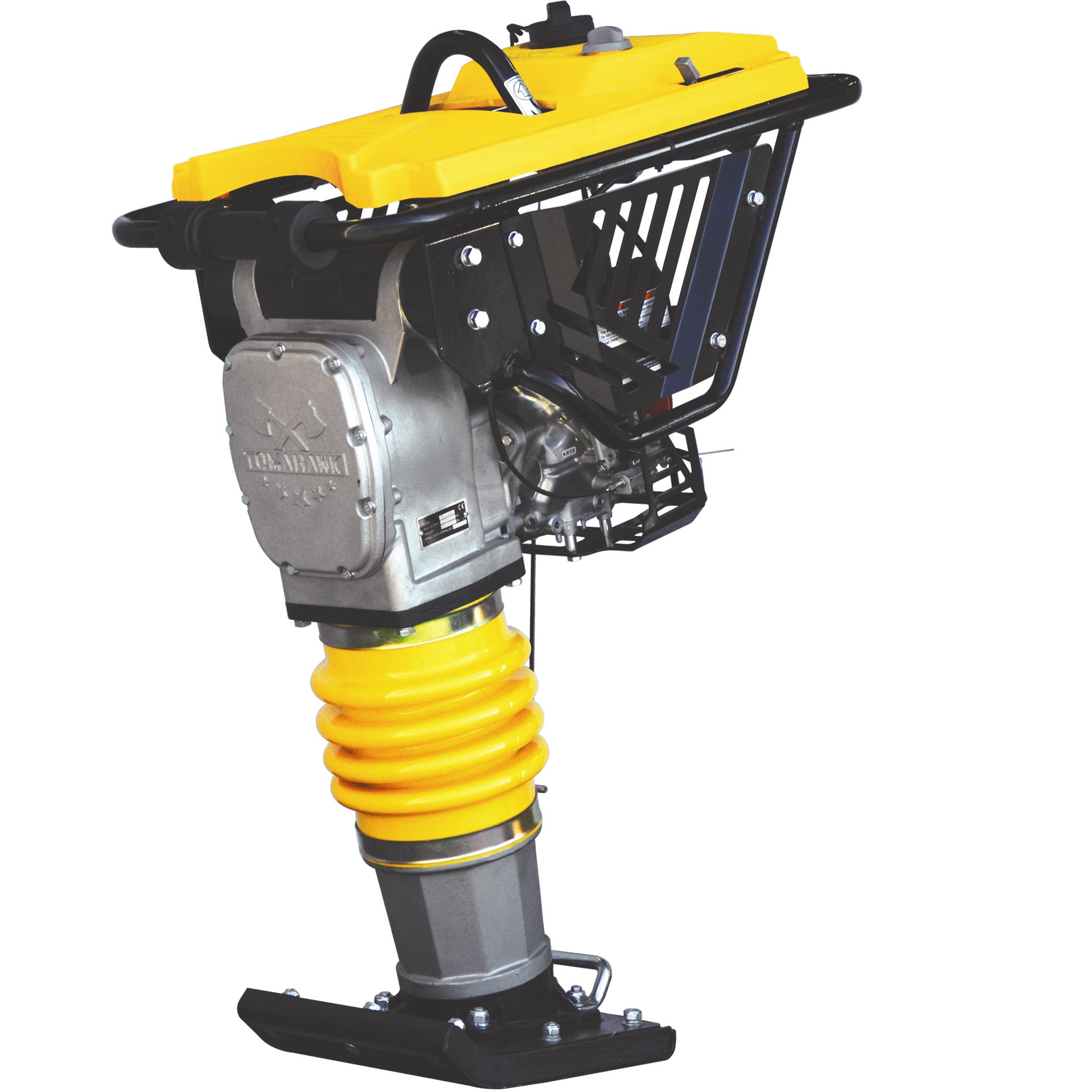
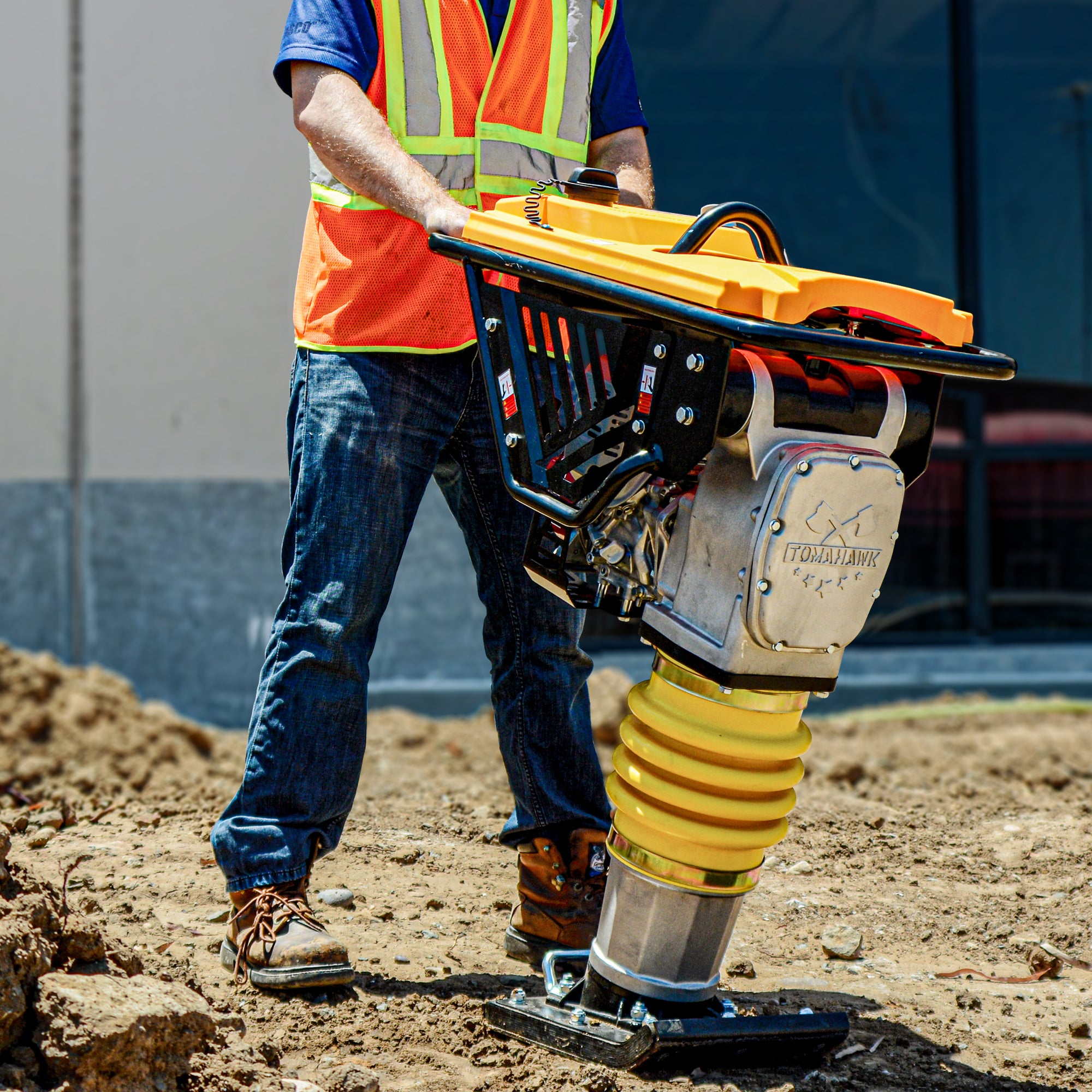
A rammer is a narrow, upright compaction tool that uses a percussive force (jumping motion) to compact soil. It’s especially effective in tight spaces and cohesive soils.
How It Works:
-
A piston mechanism drives a foot downward
-
The machine “jumps” repeatedly on the soil
-
High-impact force compacts deeper layers
Best Uses:
-
Trenches and narrow areas
-
Clay or cohesive soils
-
Foundation and footing work
-
Repair jobs in confined spaces
Pros:
-
Excellent for tight spaces
-
Greater compaction depth
-
Performs well in cohesive soils
-
High impact force
Cons:
-
Slower for large areas
-
More physically demanding to control
-
Leaves a rougher surface finish
-
Typically higher vibration felt by operator
| Feature | Plate Compactor | Rammer (Jumping Jack) |
|---|---|---|
| Area Coverage | Large, open spaces | Narrow, confined spaces |
| Soil Type | Granular (sand/gravel) | Cohesive (clay) |
| Compaction Depth | Moderate | Deep |
| Speed | Fast | Slower |
| Finish | Smooth | Rough |
The right choice depends on your specific job conditions:
-
Choose a plate compactor if:
-
You’re working on a large, flat surface
-
You need a smooth, even finish
-
Your material is sand, gravel, or asphalt
-
-
Choose a rammer if:
-
You’re working in trenches or tight spaces
-
The soil is clay-heavy or cohesive
-
You need deeper compaction
-
Both tools are essential in construction, but they’re not interchangeable. A plate compactor excels in speed and surface uniformity, while a rammer delivers power and precision in confined areas.
Understanding when to use each tool will not only improve your results but also save time, labor, and potential rework down the line.