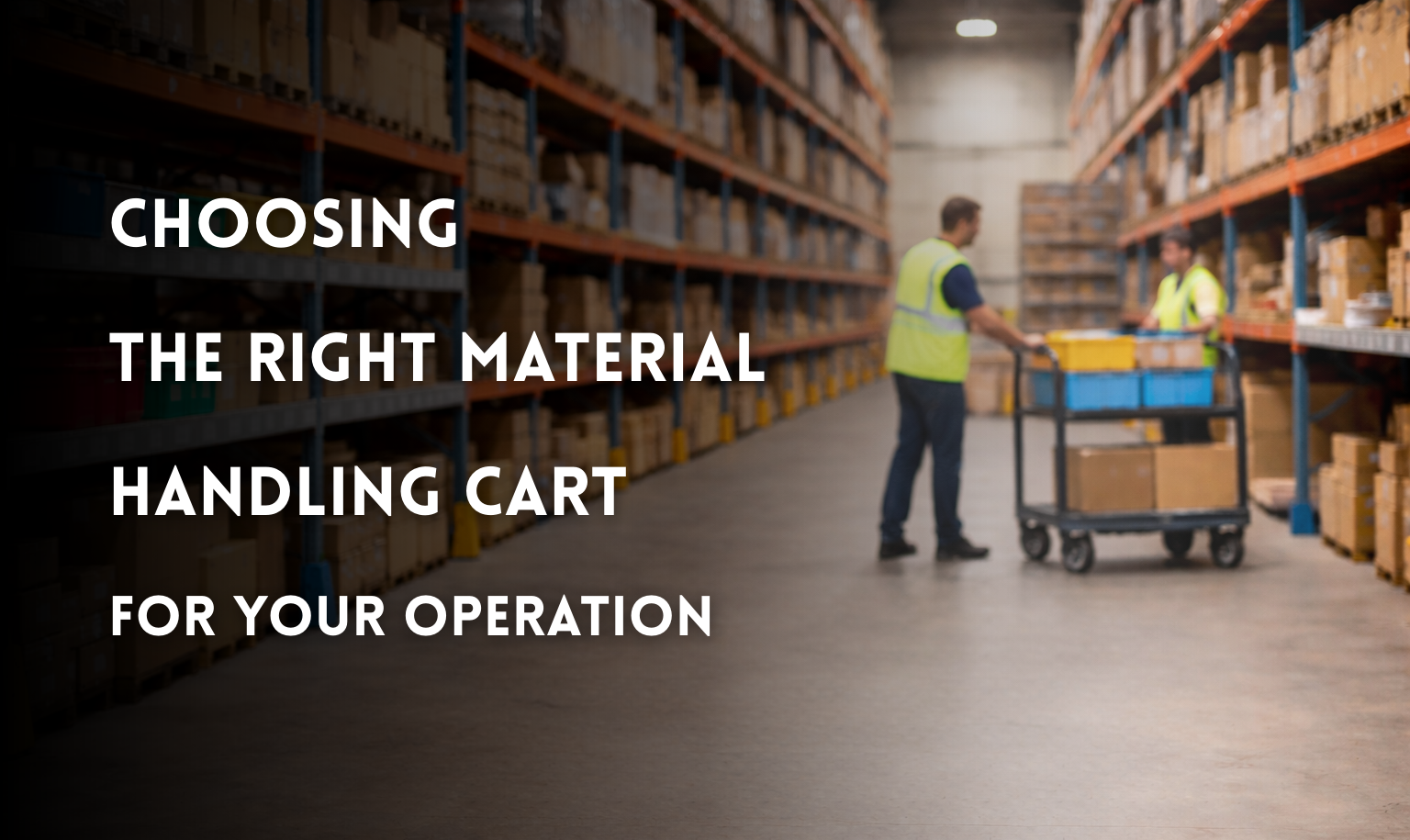
Material handling equipment directly affects how efficiently materials move through warehouses and job sites. The right cart or transport solution can reduce handling steps, support organization, and keep work areas clear. Choosing the right equipment starts with understanding how materials are lifted, moved, and staged during daily operations.
Identify the Loads You Handle
Different tasks require different handling methods. Some workflows involve lifting materials to working height, while others require frequent movement across the floor.
For lifting tasks, electric hydraulic lift tables are commonly used to raise materials to an ergonomic height for assembly or packing. For vertical access, powered stock pickers are often used to reach shelving safely in high-density storage areas.
Match Equipment to Movement Patterns
Material flow varies by operation. Some processes require controlled lifting, while others involve repeated transport between areas.
Electric dolly carts and powered hand trucks are commonly used to move boxed goods or equipment over longer distances. In tighter spaces or mixed indoor-outdoor environments, compact battery-powered utility carts with rubber treads are often used to maintain control and maneuverability.
Consider Load Stability and Handling Needs
Heavy, uneven, or dense materials require more controlled transport. Poor load stability increases the risk of damage or injury.
Utility carts and battery-powered wheelbarrow-style carts are often used for bulk material movement, especially when materials need to be unloaded directly at the work area. For specialized materials such as pavers or slabs, vacuum lifting tools are sometimes used to reduce manual handling and improve placement accuracy.
Account for Space Constraints
Cart size and turning radius affect how easily equipment moves through aisles and work zones. Larger carts may increase capacity but can limit mobility in tight layouts.
Compact carts that fit aisle widths and staging areas help maintain clear pathways and reduce congestion during busy periods.
Assign Equipment by Task
Material handling equipment is most effective when assigned specific roles. Using different tools for lifting, transport, staging, and placement improves organization and reduces misuse.
For example:
-
Lift tables for elevated work
-
Stock pickers for vertical access
-
Electric dollies for horizontal transport
-
Utility carts for staging and bulk movement
Plan for Flexibility
Operational needs change over time. Inventory levels shift, layouts evolve, and workflows adjust.
Selecting equipment that can be reassigned across tasks helps maintain efficiency without frequent replacements.
Choosing the right material handling cart depends on how materials move, how space is used, and how tasks are organized. By aligning equipment with these factors, warehouse managers can support safer handling, clearer workflows, and more efficient daily operations.