Warehouse organization doesn’t have to come at the expense of speed. In fact, the most efficient warehouses are often the most organized. When materials, equipment, and space are clearly defined, teams move faster, make fewer mistakes, and spend less time searching for tools or inventory.
For warehouse managers, the key is implementing practical organization strategies that support daily workflows rather than interrupt them. The following ten methods improve organization, material handling, and space efficiency—without slowing operations.
1. Define Clear Zones for Every Function
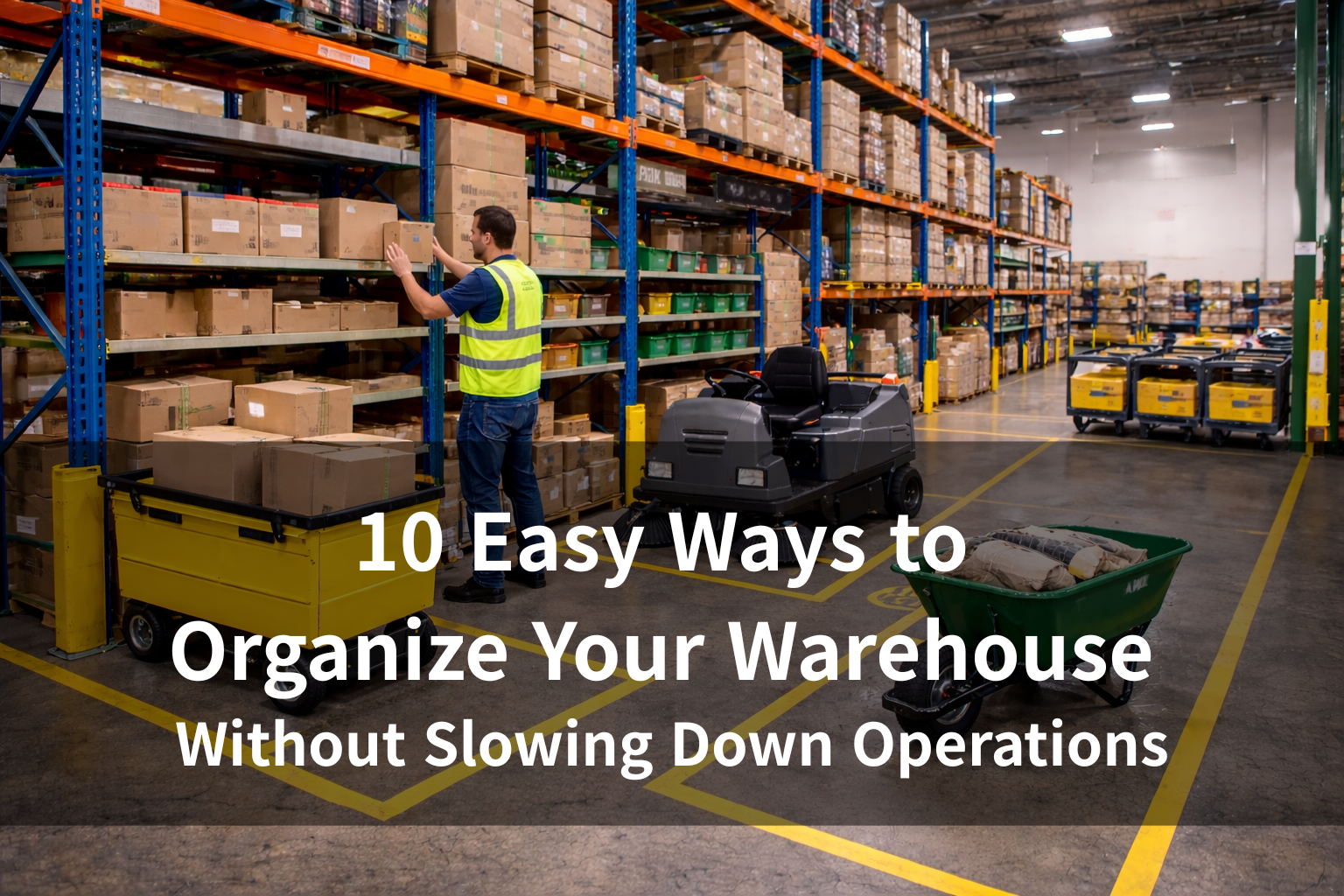
Start by clearly separating receiving, storage, picking, staging, and shipping areas. When each function has a defined zone, materials move predictably and congestion is reduced. Floor markings and signage help reinforce these boundaries and keep workflows consistent across shifts.
2. Assign Material Handling Equipment by Task
Carts and transport tools should have specific purposes. Assign utility carts to picking, restocking, or returns rather than letting them float freely across departments. Heavy-duty utility carts designed for warehouse use make this system easy to maintain by handling daily movement without frequent breakdowns.
3. Use Mobile Equipment to Reduce Clutter
Fixed storage isn’t always the most efficient option. Mobile solutions allow teams to bring tools and materials directly to the task. Electric utility carts are especially useful for repetitive routes, helping move heavier loads quickly while keeping aisles clear and reducing manual strain.
4. Keep Floors Clean to Protect Organization Systems
An organized warehouse depends on visibility. Dust and debris can quickly hide floor markings, create safety risks, and slow equipment movement. Industrial push sweepers or ride-on sweepers help maintain clean, clearly defined aisles and work zones without disrupting operations.
5. Create Designated Parking Areas for Equipment
Uncontrolled equipment storage leads to blocked aisles and wasted space. Establish parking zones for carts, wheelbarrows, and electric equipment near where they’re used most. This keeps tools accessible while preserving clear walkways and traffic lanes.
6. Optimize Vertical Storage Before Expanding Floor Space
Before expanding your footprint, look up. Improving vertical storage allows warehouses to increase capacity without sacrificing floor space. Clearly labeled racks and consistent storage rules help teams access inventory quickly while keeping ground-level areas open for movement.
7. Use Simple Visual Systems to Reduce Decision Time
Visual cues speed up work. Color-coded zones, labels, and signage help workers instantly identify where materials belong and which tools to use. When combined with organized material handling equipment, visual systems reduce hesitation and keep workflows moving.
8. Match Equipment to Load Size and Frequency
Overloading equipment or using the wrong tool for the job slows operations and causes unnecessary wear. High-capacity wheelbarrows and carts designed for warehouse environments support faster movement while reducing damage and downtime.
9. Maintain Clear Aisles at All Times
Aisles should never double as storage areas. Keeping them clear improves safety, speeds transport, and protects material handling equipment from collisions. Consistent aisle enforcement, supported by floor markings and routine cleaning, keeps traffic flowing smoothly.
10. Build Organization Into Daily Routines
The most effective organization systems are the ones that become habits. Encourage teams to return equipment to designated areas, remove debris at the end of shifts, and report layout issues early. Durable equipment that’s easy to store—such as well-built carts and sweepers—makes these habits easier to maintain.
A well-organized warehouse doesn’t slow operations—it accelerates them. By defining space, assigning equipment intentionally, and maintaining clean, visible workflows, warehouse managers can improve efficiency without adding complexity.
When these strategies are supported by dependable material handling tools like heavy-duty utility carts, electric transport equipment, and industrial sweepers, organization becomes part of everyday operations rather than an ongoing challenge. The result is a warehouse that runs faster, safer, and with far less friction.